Partial edentulism is a condition characterized by the absence of one or more teeth in the upper or lower jaw. It is not a disease, but a consequence of various dental and periodontal conditions, injuries, or developmental disorders. Partial edentulism is very common not only in adults but also in children, and represents one of the most frequent issues in modern dentistry.
Why tooth loss occurs
The most common cause of tooth loss is dental caries, which—if not treated on time—can affect the root and the bone. The next most common cause is periodontal disease, which leads to loosening, mobility, and loss of teeth, as well as injuries to the teeth and jaw. In some cases, tooth loss may also result from developmental disorders, where permanent teeth do not erupt properly or fail to erupt at all.
Regardless of the cause, the consequences are similar: the remaining teeth tilt and shift toward the empty space, leading to changes in the bite, joint stress, and often difficulties with chewing, speech, and smile aesthetics.
Fixed prosthetic restorations
Fixed restorations cannot be removed from the mouth and include crowns and bridges.
Crowns are made when a single tooth is missing.
Bridges are placed when several teeth in a row are missing.
They are most commonly made of metal covered with ceramic, while today metal-free ceramics (zirconia) are increasingly used due to their excellent strength and natural appearance. The color and shape of crowns and bridges are adjusted to match the surrounding teeth, making them almost unnoticeable.
Removable prosthetic restorations
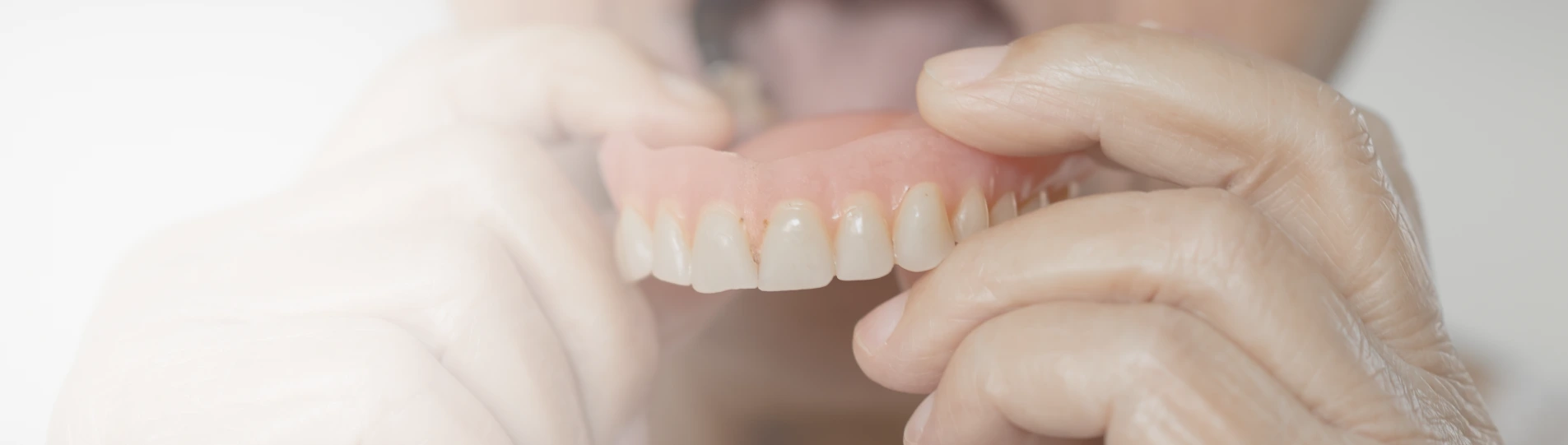
Removable restorations (dentures) can be taken out and placed back into the mouth by the patient. They are divided into complete dentures (when all teeth in a jaw are missing) and partial dentures (when only several teeth are missing).
The most common types are:
Acrylic dentures – made of acrylic; lightweight but temporary (lasting 3–4 years).
Skeletal dentures – have a metal framework, transmit chewing forces more effectively, and are more durable.
Valplast dentures – flexible, thin, and comfortable; made of modern materials that do not break and are well accepted by patients.
Implant-supported dentures – a modern and stable solution providing the best sense of security, natural appearance, and functionality.
How to choose the right prosthetic restoration
The choice depends on the number and arrangement of remaining teeth, the condition of the bone, and the patient’s preferences. After an examination, the dentist determines the most suitable solution—whether a fixed bridge, crown, denture, or a combination with implants.
Modern materials and precise techniques today allow full restoration of function, aesthetics, and comfort, so partial edentulism no longer needs to be a problem—neither medically nor aesthetically.